
Veneered and painted interior doors, styles and options
Interior doors influence the feel of a room more than it might first appear: they visually complete the interior, define the “language” of materials, and affect daily ease of use. Therefore, when choosing interior doors, it is important to understand not only the design but also the type of finish, directions, and customization options. In this section, we briefly and clearly explain the difference between veneered and painted doors, how to correctly determine the opening direction and veneer grain direction, as well as what can be customized when ordering doors from MS Durvis.
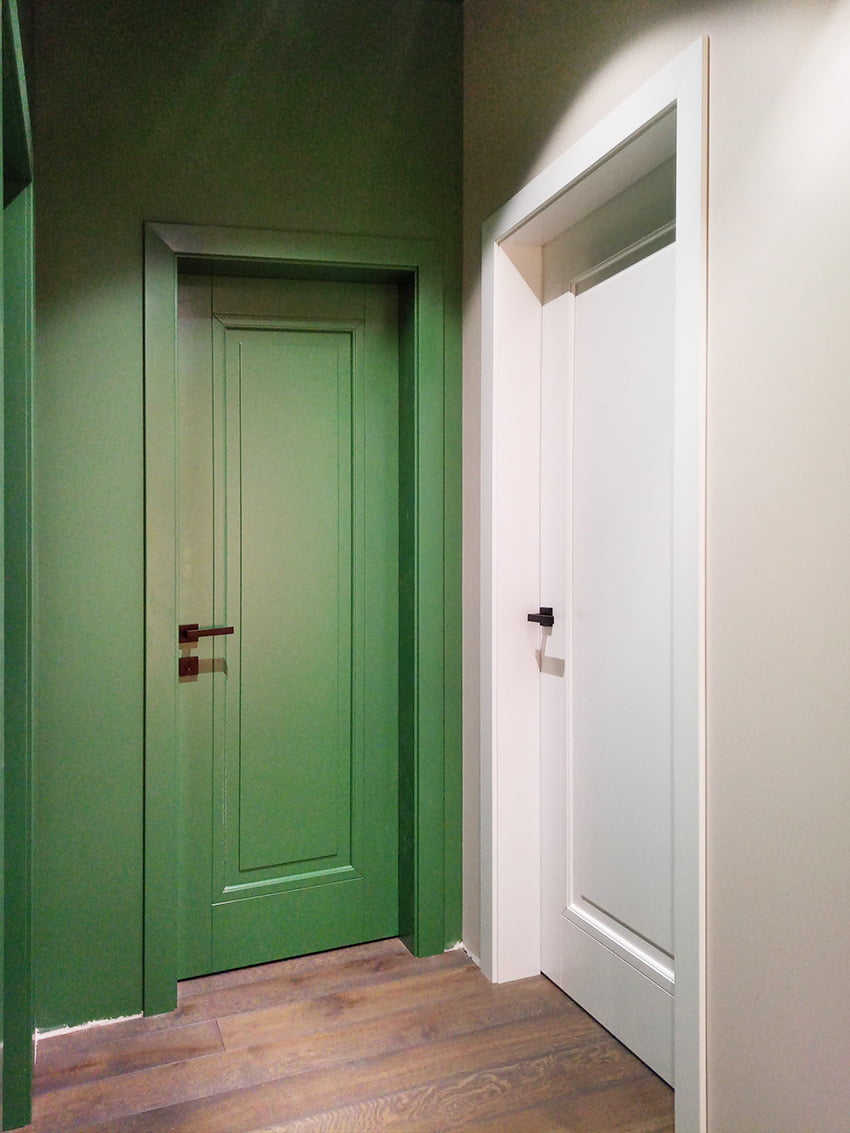

Door selection is most often determined by two factors: the desired visual effect and long-term practicality. Veneer and paint provide a different “character”—in one case, natural wood texture dominates, while in the other, clean lines and tonal freedom prevail.
Veneered interior doors – natural wood grain and warmth
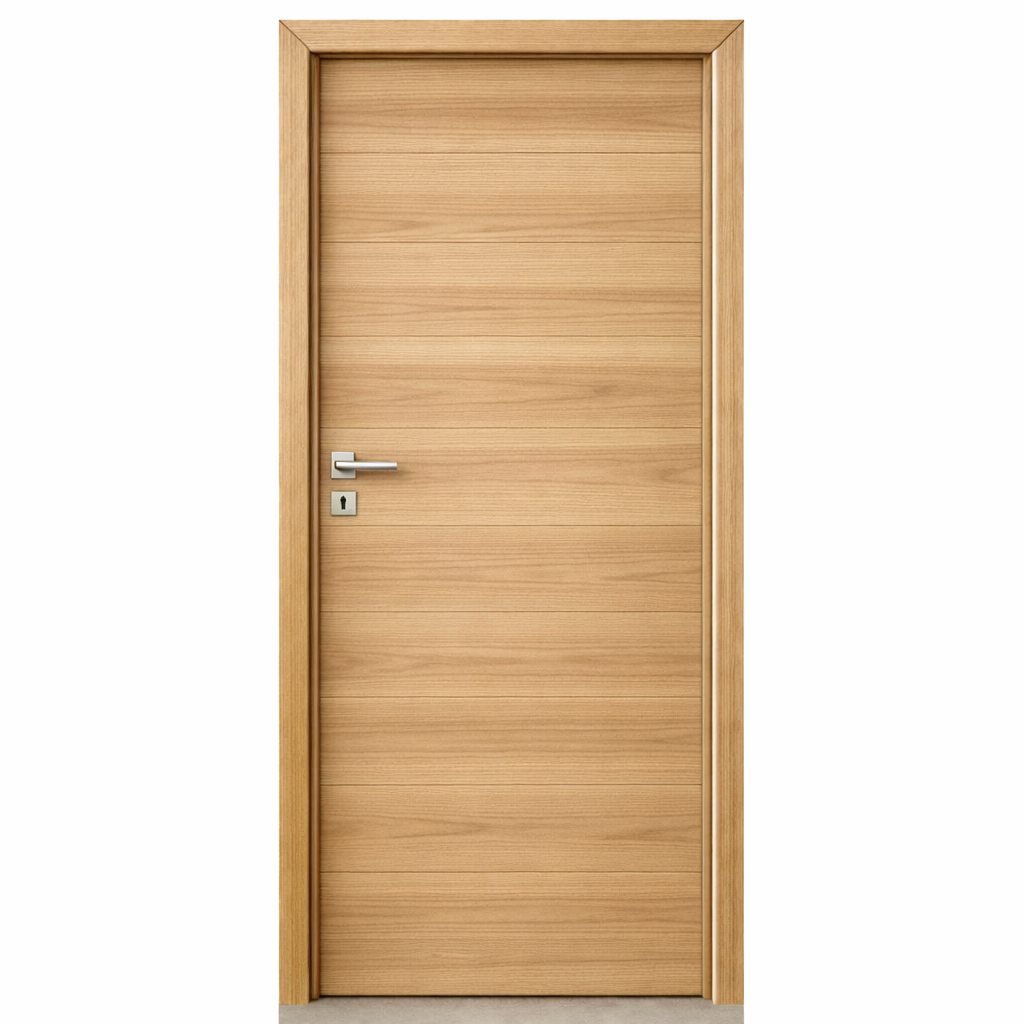
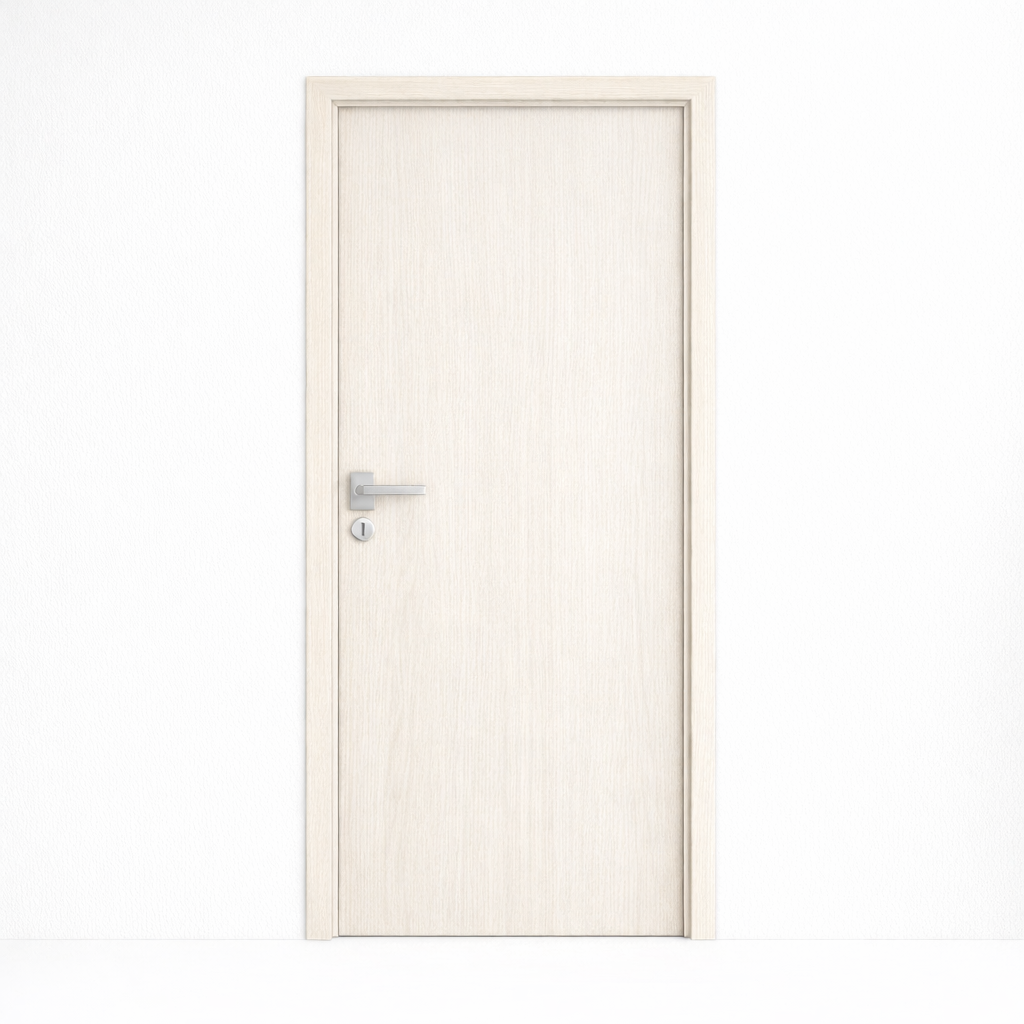
Veneered doors are finished with a thin layer of real wood (veneer), which allows for an authentic wood texture and a unique pattern. This means the doors “live” within the space—they harmonize with the flooring, furniture, and wall paneling, especially if the interior features wooden elements.
Why customers often choose veneered doors:
- Natural look: visible wood grain, a sense of tonal depth.
- Wide range of staining options: can be matched to the floor, panels, or furniture.
-
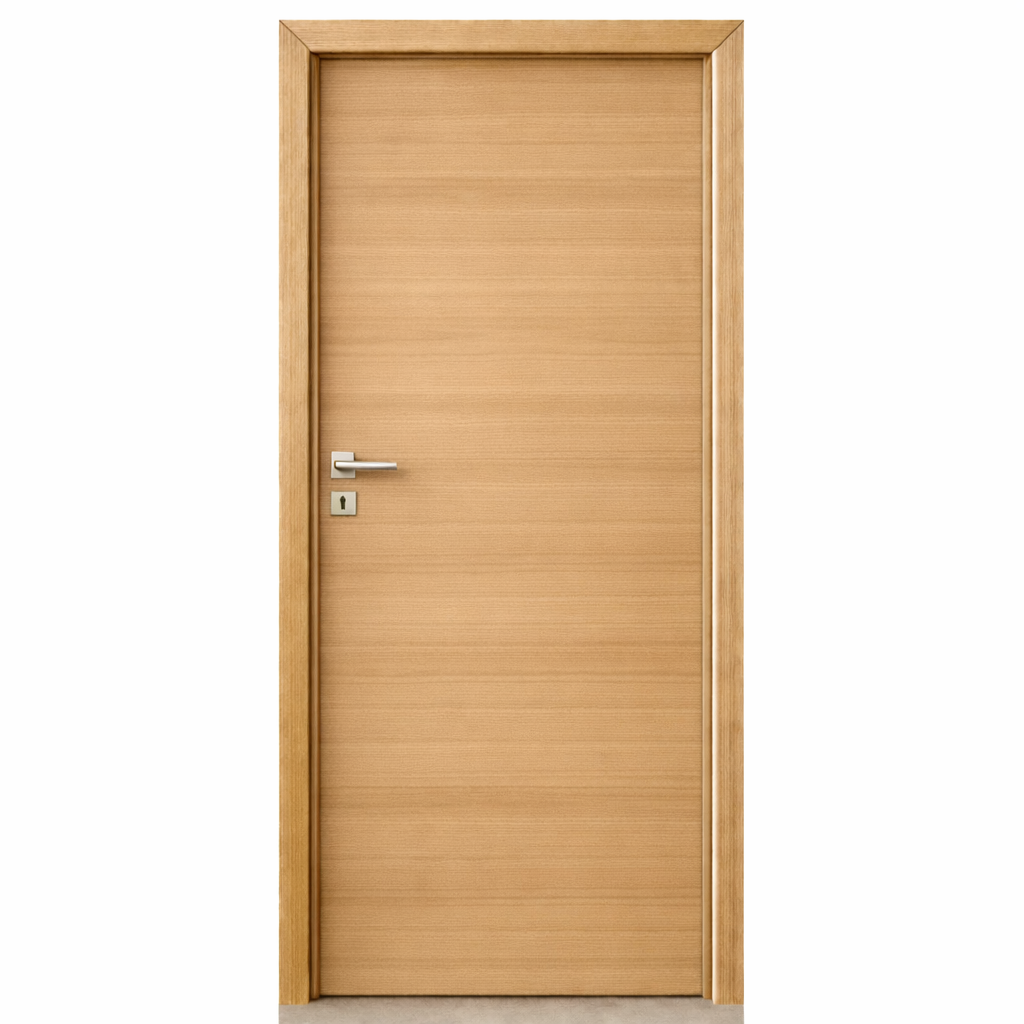
Choice of direction: the veneer can be applied vertically or horizontally, changing the perception of the room’s proportions.
Painted interior doors – minimalism, precision, and any shade
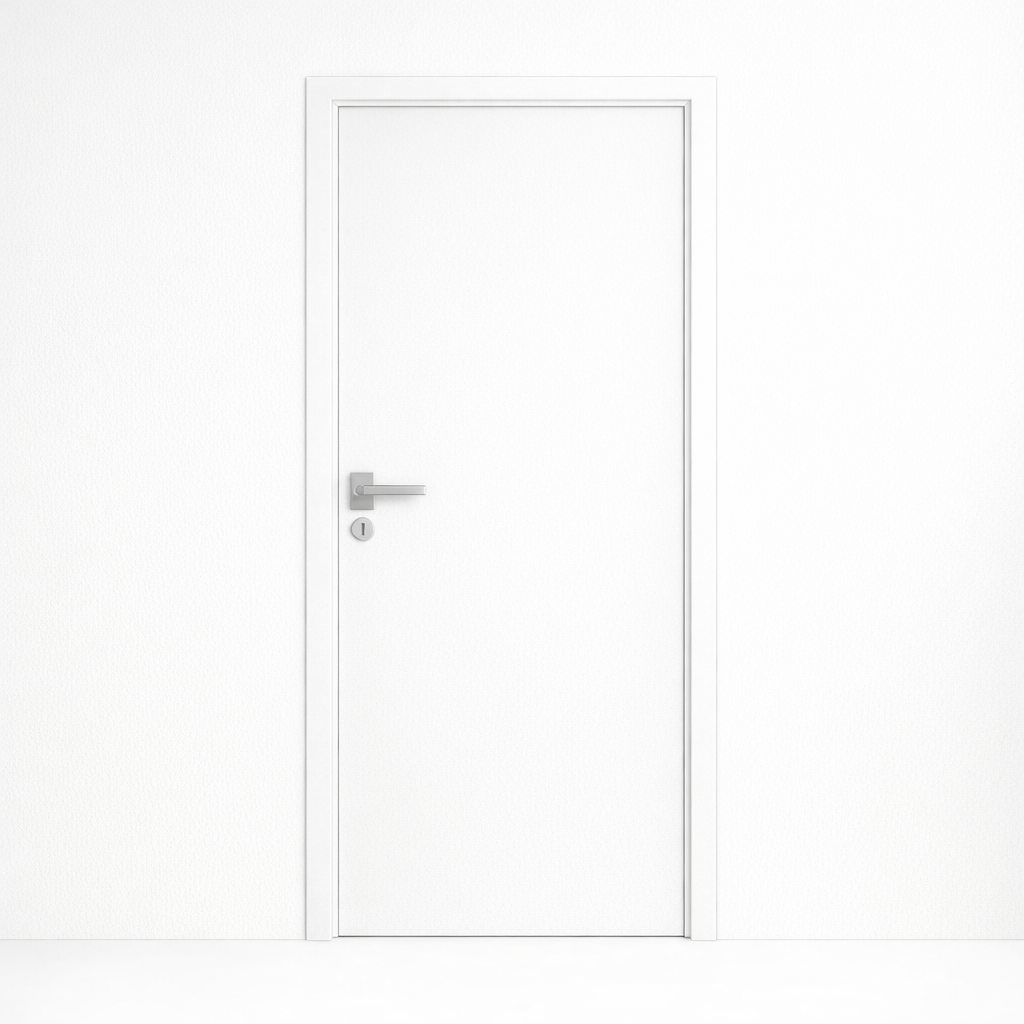
Painted doors are the ideal solution for modern and clean interiors where a smooth surface without a wood grain is desired. The main advantage here is freedom: you can choose a shade that precisely matches the walls, floors, or accents.
Advantages of painted doors:
- Choice of shade: from classic white to graphite, sand, olive green, or black tones.
- Surface uniformity: looks “architectural”—pairs particularly well with wall panels.
- Lacquer sheen to taste: matte, semi-matte, semi-gloss (depending on the desired effect and overall interior).
How to determine the door opening direction (left-hand/right-hand doors)?
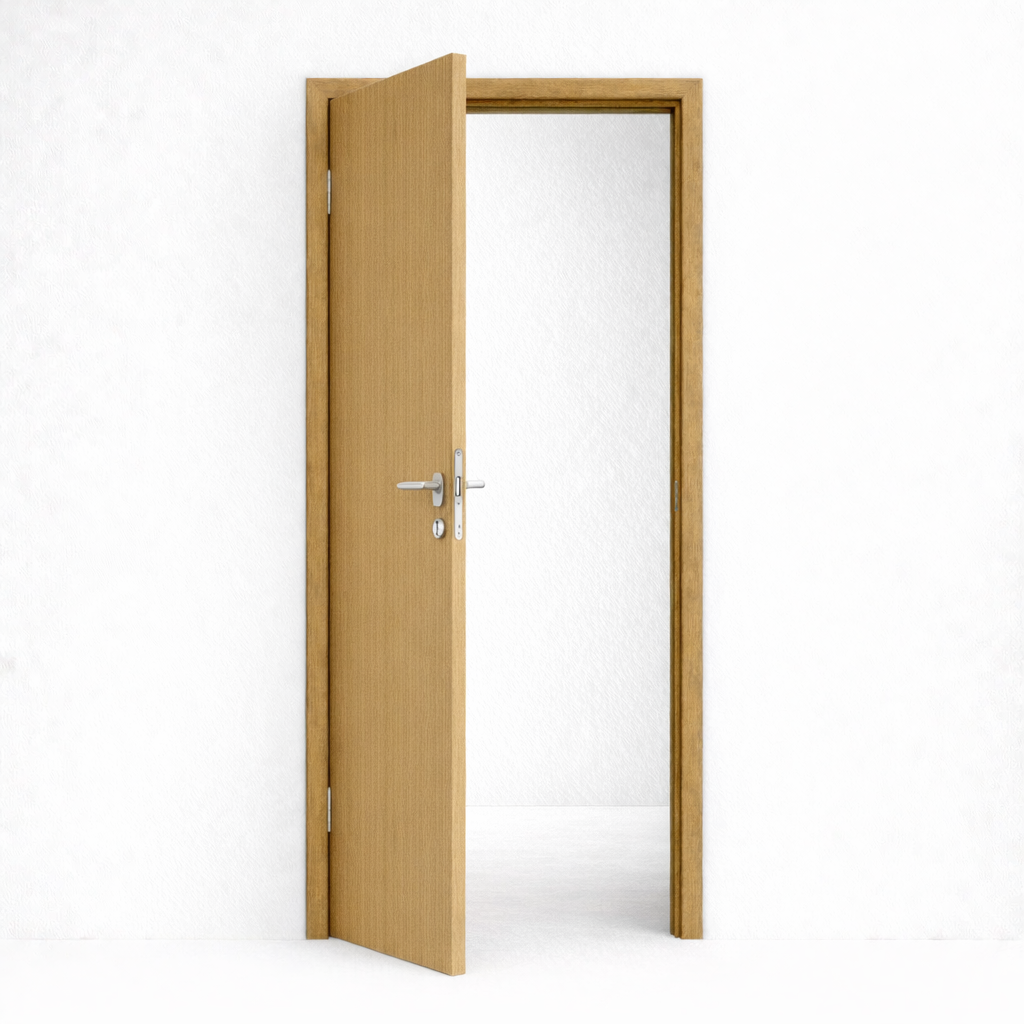
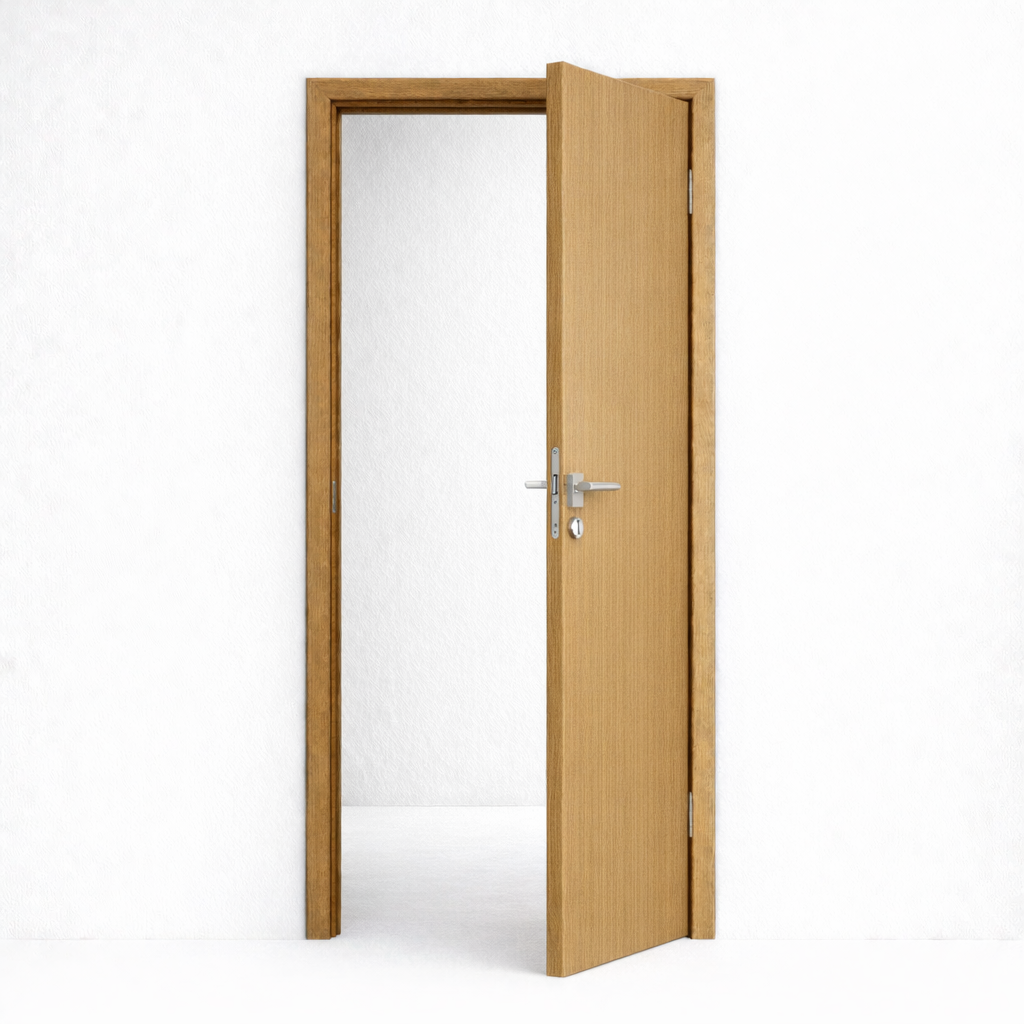
To ensure the doors are comfortable to use and do not obstruct the flow of the room, it is important to correctly determine the opening direction.
The simple method:
- Stand on the side of the door where the door opens toward you (you can see the hinges).
- If the hinges are on the left, it is a left-hand door.
- If the hinges are on the right, it is a right-hand door.
Why it matters: the opening direction affects whether the door will interfere with furniture, switches, the hallway, shelves, or the door’s opening trajectory. If necessary, we help evaluate the most suitable option for a specific room.
Veneer direction: vertical or horizontal—what does it change?
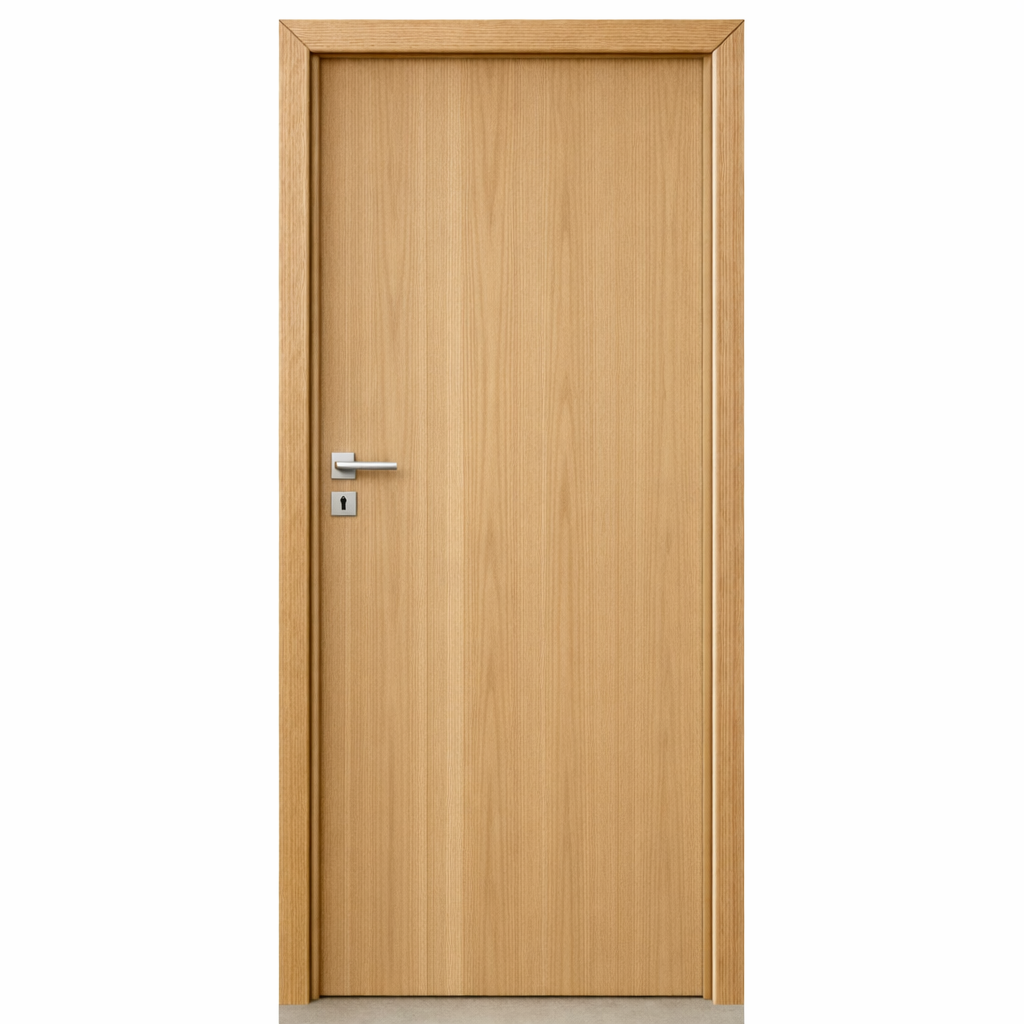
Vertical veneer
Horizontal veneer
Horizontal veneer creates a modern rhythm and visually “widens” the wall. It is a popular solution in modern interiors, especially in combination with wall panels or linear accents.
Customization upon order: hardware, shade, and lacquer sheen
When ordering doors from us, it is possible to configure a solution that precisely matches the interior and usage habits.
What you can choose:
- Hardware: handles, hinges, locks, closers (including visually coordinated sets).
- Door tone: for veneer—staining; for painted doors—the selected color shade.
- Lacquer gloss: matte/semi-matte/semi-gloss (depending on the desired visual effect and maintenance habits).
A small tip: matte surfaces are visually more “calm”, semi-matte are versatile, while glossier surfaces emphasize lines and reflections more.
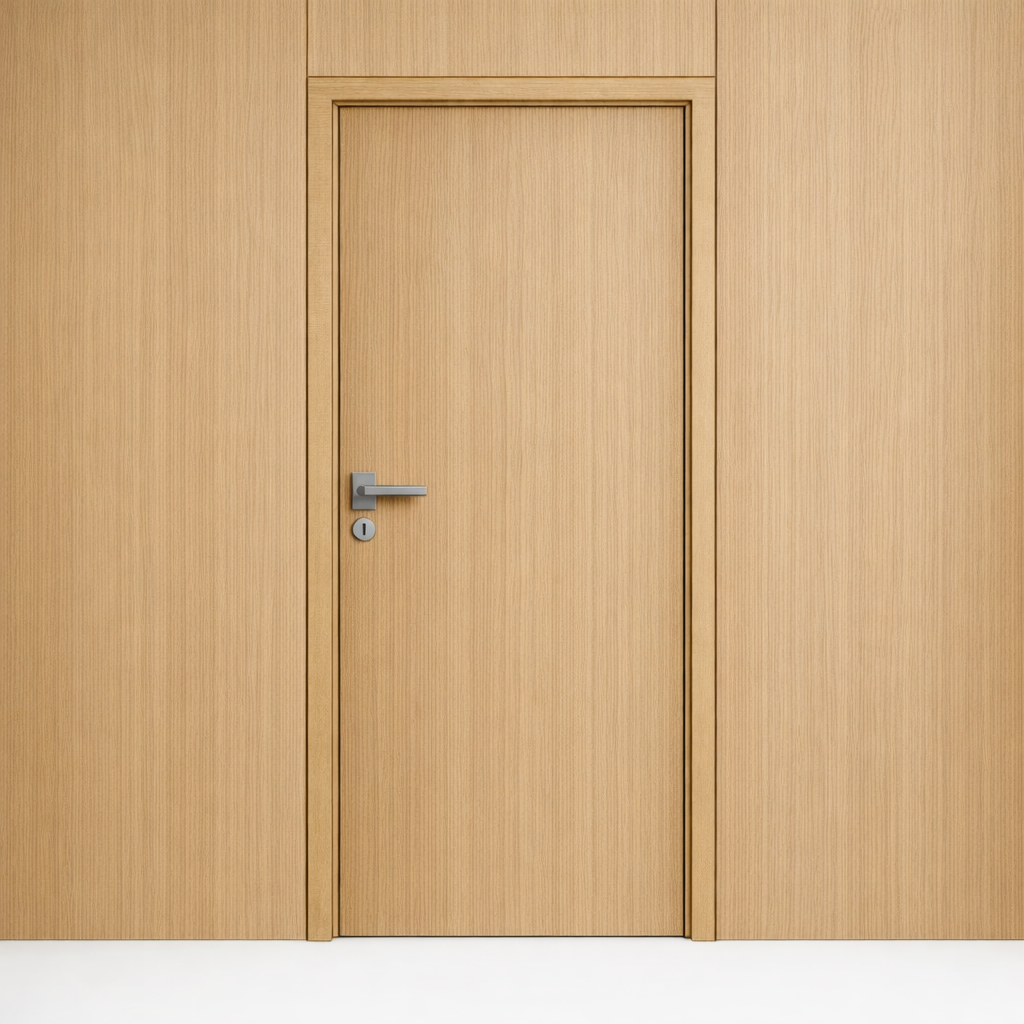
Door integration into wall panels — a unified, clean architecture.
We integrate doors into our wall panel solutions to achieve a visually unified surface. The result is clean, modern, and highly design-oriented: the door becomes an extension of the wall rather than a separate element.
Benefits of panel integration:
- consistent matching of materials and tones,
- visually cleaner transitions and precision,
- an especially effective solution for hallways, living rooms, offices, and rooms with panel finishes.


